

- AUDIO ONE-TO-ONE Call Now: 210-805-9927
- Contact
- Register
- My Account
SoundBites Winter 2016

Winter 2016

It’s that time of year again! We’re back from the annual pilgrimage to hallowed halls of High End Audio at the Venetian Hotel in Las Vegas for the Consumer Electronics Show. Fortunately high end audio is segregated from the consumer side of CES with its cacophony 170,000 attendees and 2.4 Million square feet of bedlam. The Venetian is still a crowded venue, but most suites offer enough solitude to evaluate the latest offerings from the best brands of the audio the world has to offer.
Here we go!
GOLDEN EAR: These mega-value speakers have been very popular with our customers and the audiophile press goes ga-ga over every release from design guru Sandy Gross - and with good reason - it’s hard to find a better speaker value in the marketplace.
At CES Golden Ear announced the second generation Triton Two and Three, the Triton Two+ and Triton Three+. The new designs incorporate many of the advanced technologies and refinements developed for the Triton One, along with the successful application of new innovations and discoveries, the result of current efforts.
Research and development was carried out at the company’s extensive engineering facilities located in Arnprior, Ontario. The lab includes a full‐size anechoic chamber which is a duplicate of the world famous chamber at the NRC. Powerful new development software, including a unique program for analyzing cones and surrounds, was an important tool in optimizing the design of the new speakers. Additionally, Golden Ear benefited from the services of a talented new senior acoustics development engineer, working under Bob Johnston, GoldenEar’s head of engineering.
Some specific components that were changed include new upper bass/midrange drivers, which incorporate a new cone, surround, spider and voice coil. Additionally, a completely new balanced crossover with polypropylene capacitors, similar to the one developed for the Triton One, is incorporated. The DSP software was rewritten using the methodology developed with the Triton One project. This reduced the number of filter stages in the signal path, yet at the same time, flattened the low frequency response, especially in the important sub‐woofer/mid‐range crossover area between 100 and 250 Hz., as well as in the lower bass and sub‐bass regions.
Additionally, the DSP low‐level control unit is, in effect, new, as it has been completely reprogrammed. Sonically, both the Triton Three+ and Triton Two+ benefit from a significantly smoother, higher resolution, more open, more revealing and more highly detailed sound. In addition, there is dramatically more expansive imaging and tighter, faster, and better integrated bass.
In their CES suite, designer Sandy Gross was driving the Triton 3+ with a Rogue Cronus Magnum II tube integrated amplifier (a combination we’ve favored here for some time). The sound was superb! To my ears, easily the best sounding moderately priced system I heard at CES.
Dennis Berger in HD Living writes about the Triton 3+: “The fact that you can get your hands on this level of sonic perfection for a mere $2500pr is just a little dumbfounding.”
Availability is February 2016. Retail Price for Triton Two+ and Three + are $1749/ea and $1249/ea respectively.
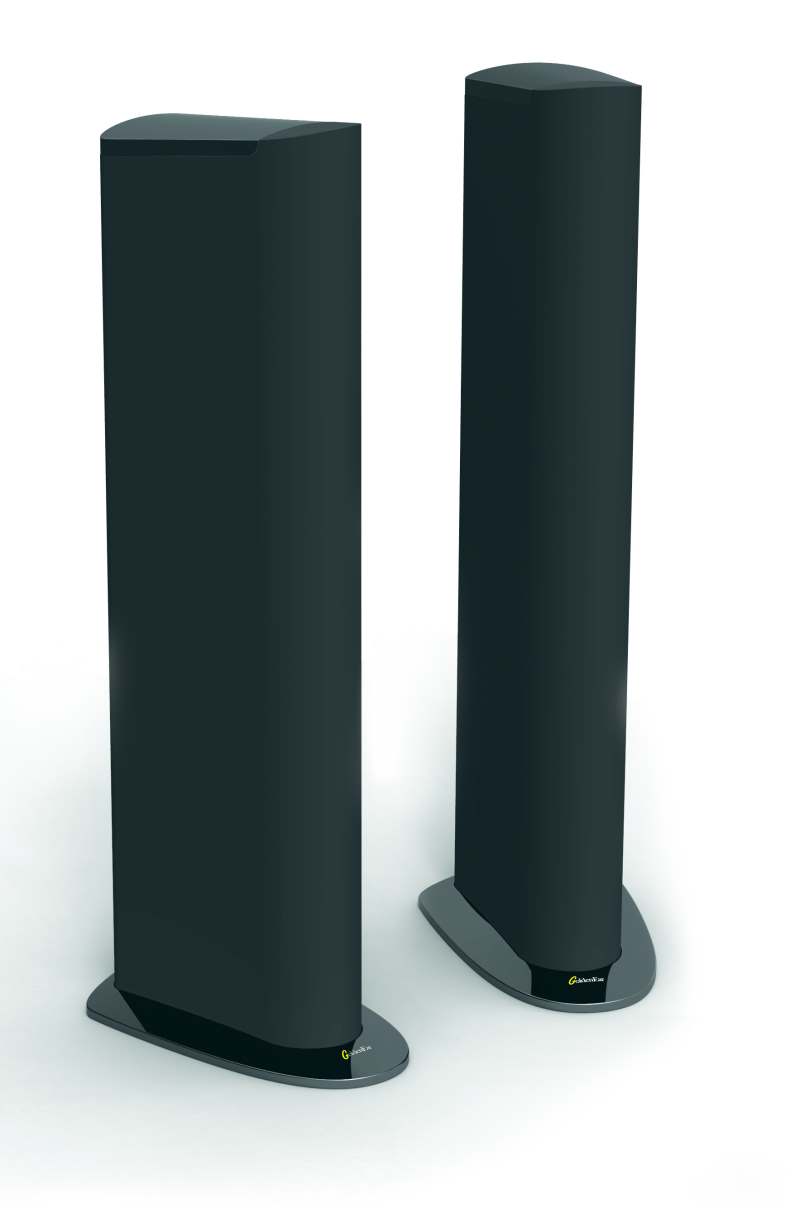
Golden Ear Triton 2+
SHUNYATA: Shunyata Helps Save Lives: Shunyata Research products are now finding their way into Hospitals and Surgical Labs. Specifically, Shunyata Research products were discovered by an Electrophysiologist, Dr. Daniel Melby, Director of Electrophysiology at the world renowned Abbott Heart Hospital in Minneapolis.
“Since the team of Doctors at Abbott Heart Hospital discovered that Shunyata Research Power Conditioning Systems dramatically lowered measurable noise in their Surgical Labs, we have been contacted by many more Hospitals and Bio-Tech companies, both from within and outside the United States. As we begin this new endeavor, we would like all of our retail partners to share in this success by using the enormous, empirical measurements and application credibility when speaking your customers. There is no achievement quite like this in all of high-end audio to be sure, and our reputation in the medical field is still growing.” – Shunyata Research
Dr. Melby's testimony, noise measurements and a video of his experiences are now posted on the Shunyata You Tube Channel, and it is fascinating:
Noise Reduction in Medical Procedures Using Shunyata Technology
SHUNYATA ANNOUNCES NEW VENOM MPC-12 Versions! The MPC-12A is designed for dedicated audio/video systems while the MPC-12C is designed specifically for computer and music server based systems. Both represent a significant upgrade path from the VENOM PS-8 or other power conditioner.
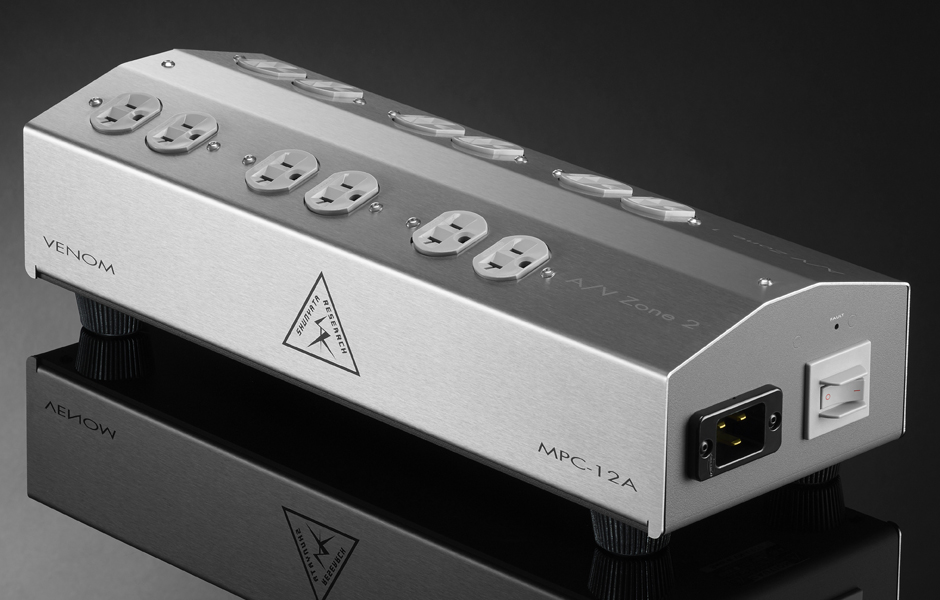
Shunyata MPC-12A

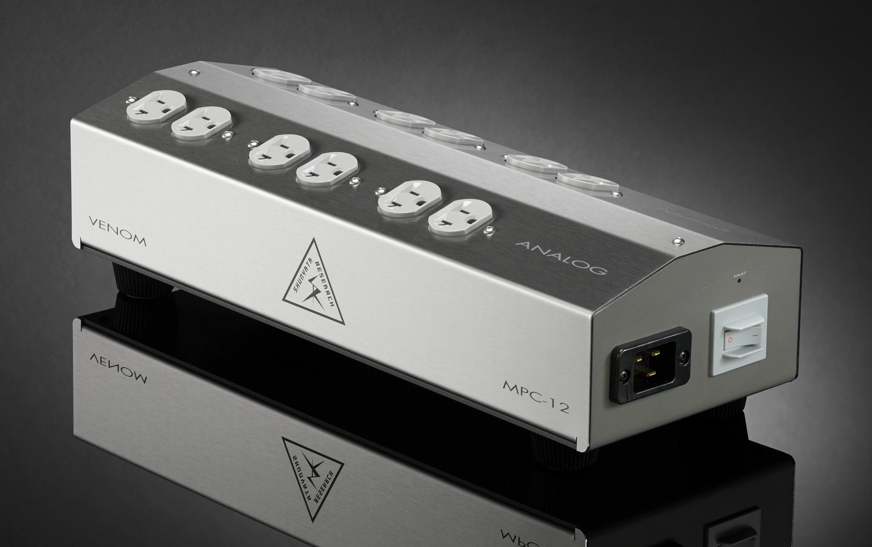
Shunyata MPC-12C
The MPC-12A is similar in function to our traditional power distributors in that it is intended for typical audio and video systems that are not specifically computer based audio systems. The "A" designation stands for audio although it can also be used with all types of audio/video systems. The MPC-12A offers two independent zones of 6 outlets each, for a total of 12 outlets
allowing for segregation of analog and digital components or between amplifiers
and source components. The two isolated zones are labeled "A/V Zone 1" and "A/V Zone 2".
The MPC-12C is designed specifically for computer-audio and media server systems employing network, storage and digital processing devices. The inexpensive external power supplies (wall-warts) common with these types of products are exceptionally noisy, kicking back copious amounts of grunge back onto the power line. The MPC-12C was designed specifically to isolate or "firewall" the computer and peripheral components -- preventing them from polluting the performance of your high-end audio components.
Both MPC-12 models feature on-board surge protection, CCI noise reduction and electromagnetic over-current protection with a built-in status L.E.D. indicator. MPC-12A Retail Price: $1995, MPC-12C Retail Price: $2495
BRYSTON: Bryston unveiled their Cubed Series amplifiers. The next progression beyond the previous squared products, the Cubed Series feature an innovative next generation input topology. The patented circuitry dramatically reduces distortion, resulting in significantly improved performance. According to Bryston, most notable sonic advances are in the area of soundstaging and overall resolution. I was told the upgrade also enhances tonality with a fuller, richer lower midrange. The new front panel design gives the Cubed Series a distinctive appearance.
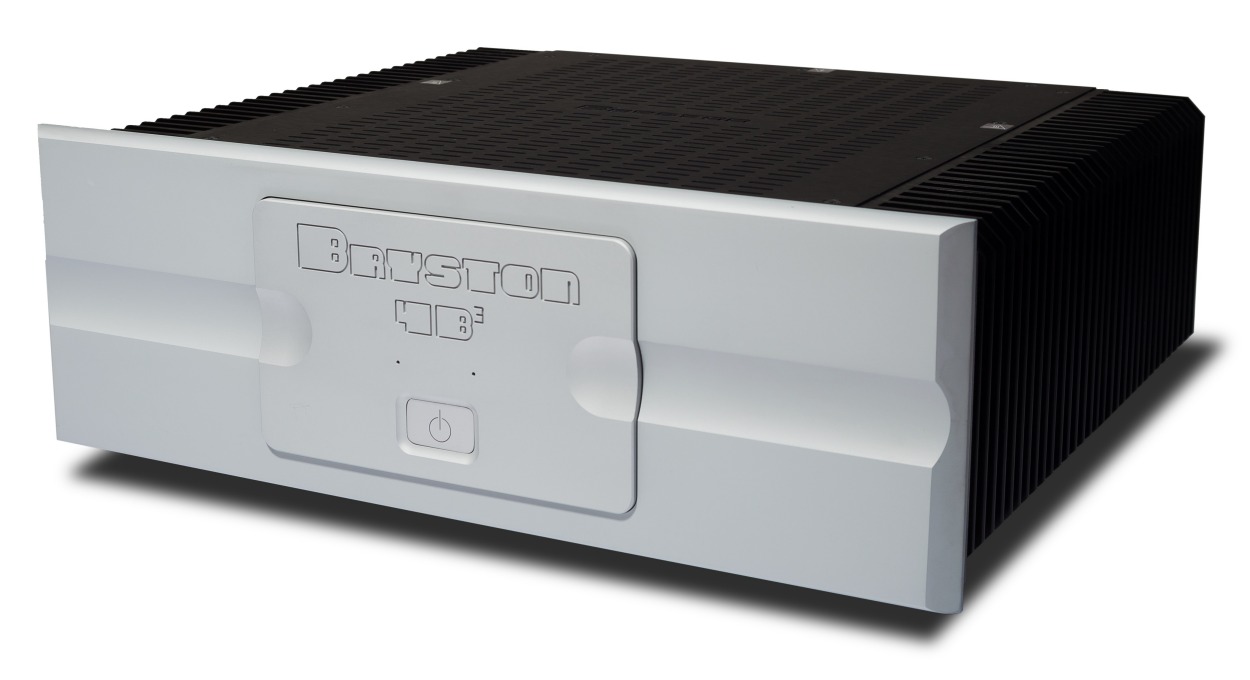
Bryston 4B SST Cubed
Arriving just prior to CES was the new BDA-3 DAC. The very full-featured model packed with features and delivers great sonic performance through re-sampling and re-clocking of the digital input signal. With the exception of user-selectable up-sampling, the BDA-3 doesn't convert anything to another format or re-sample at a non-native rate. The most notable difference between the BDA-2 and BDA-3, in addition to PCM playback capable of 384kHz/32 bit resolution, is that the BDA-3 is fully DSD enabled. The BDA-3 can decode up to DSD-256, through asynchronous USB inputs, and accepts SACD input via HDMI. The BDA-3 incorporates 10 separate inputs which include four 2-channel HDMI, asynchronous USB, AES/EBU, TOSLINK, and digital coax. Additionally, the network module which facilitates control via TCP/IP and RS-232 makes the BDA-3 a must for modern home automation. Price is $2995
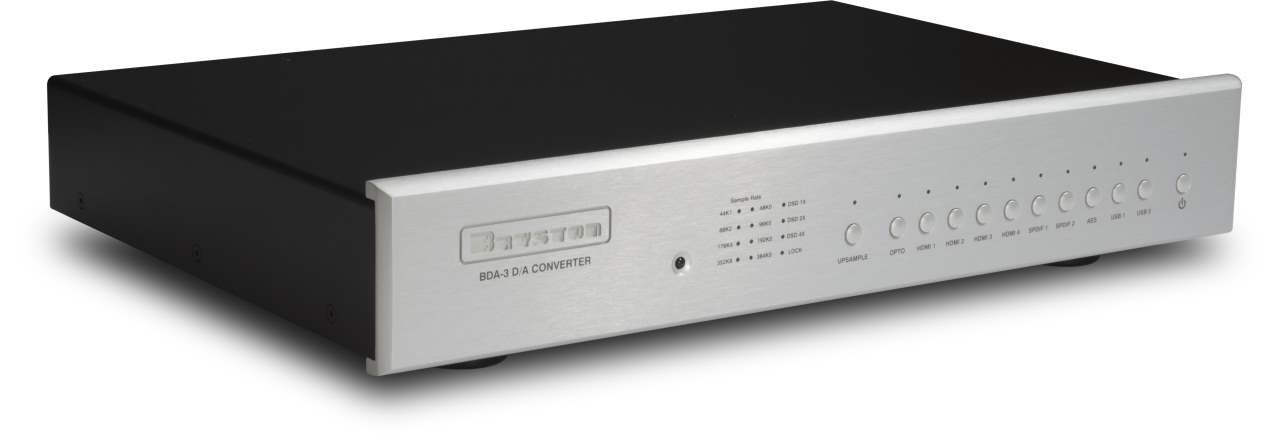
Bryston BDA-3 DAC
Winter 2016
AUDIBLE ILLUSIONS: Congratulations to Audible Illusions for the great review (well deserved) of their outstanding L3A tube line stage preamp. In the January Issue of The Absolute Sound, Dick Olsher writes: “The L3A line preamp distills the best attributes of modern tube sound: swift transients, a detailed presentation, and natural yet non-euphonic textures. It is its insistence on the sonic truth that defines it as a true reference line preamp. The L3A’s ability to retrieve the music’s rhythmic drive and drama make it one of the most sonically persuasive line preamps on the market and one of the best I’ve auditioned over the years at any price. If your goal is to conjure up audible illusions on a grand scale, this is your preamp!”
We’ve had the pleasure of enjoying the L3A and think it’s a crowning achievement for Art Ferris in the long lineage of the wonder preamplifiers he’s crafted at Audible Illusions.
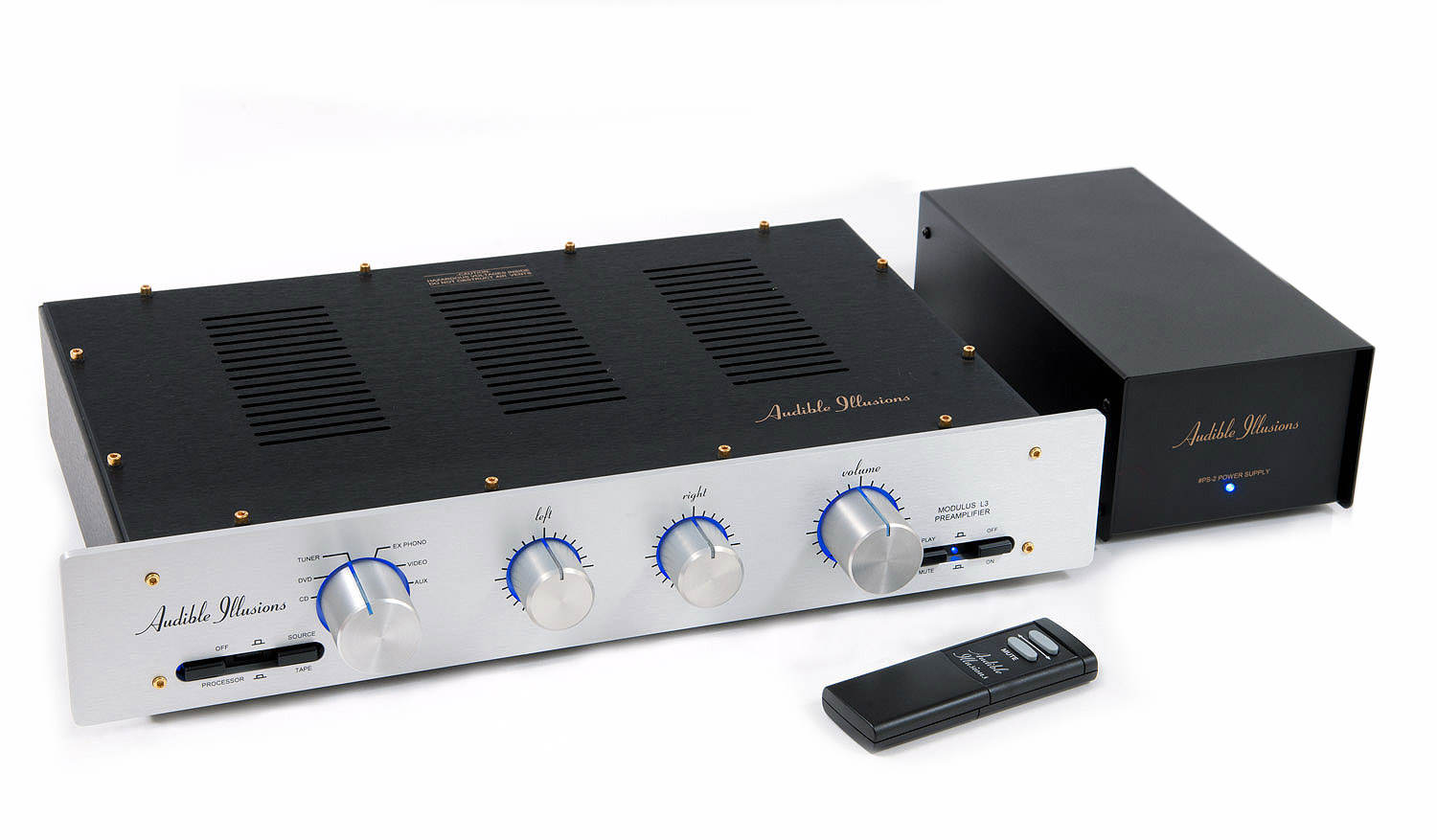
Audible Illusions L3A Tube Line Stage
AURENDER: Unveiled at CES was the latest addition to the superlative products from Aurender, the A10 caching network player/server with analog output. Unlike Aurender’s other models, the A10 includes an internal DAC, making it ideal for those looking for a one box digital solution. Price should around $5k with availability about mid-year.
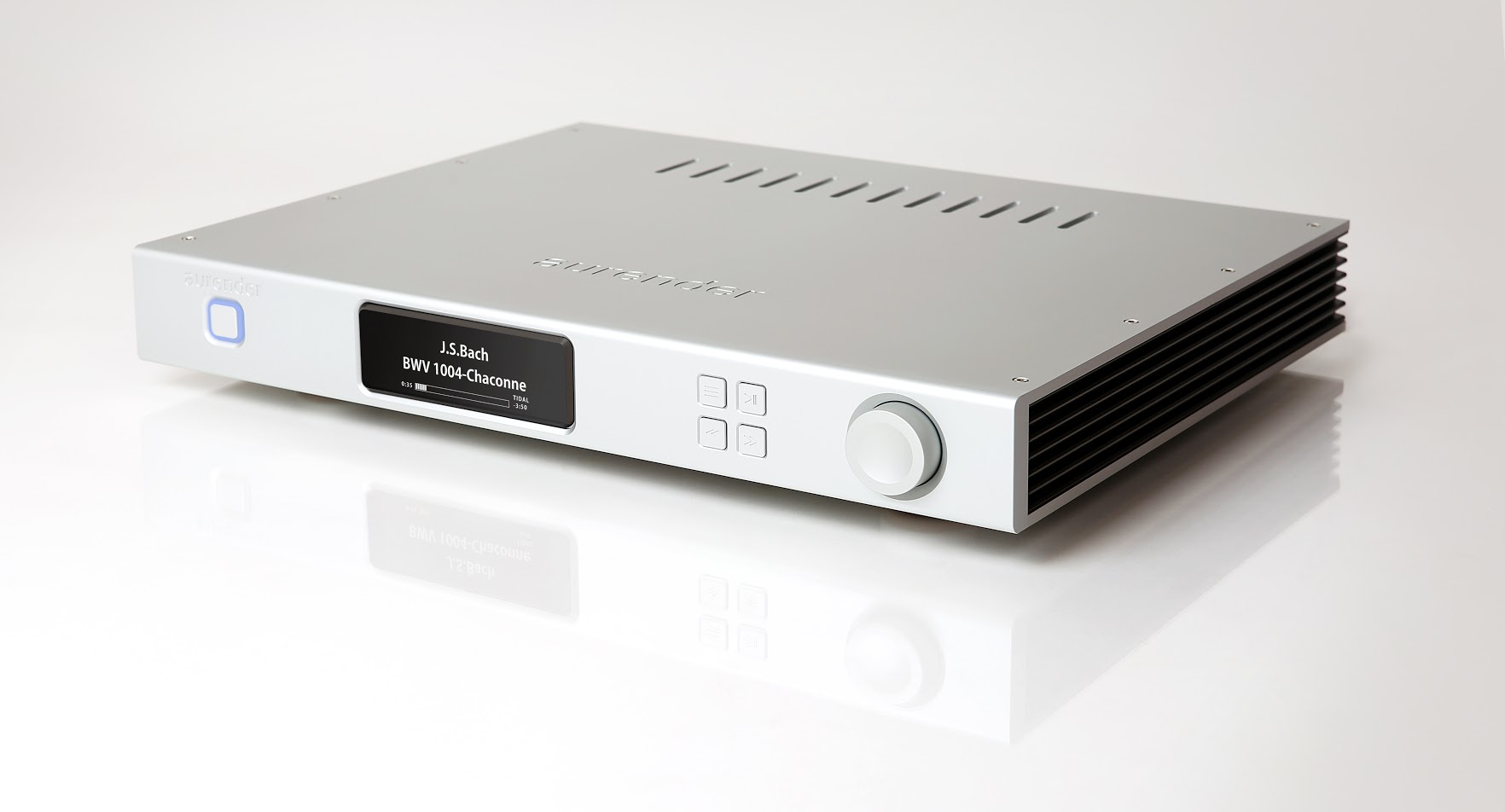
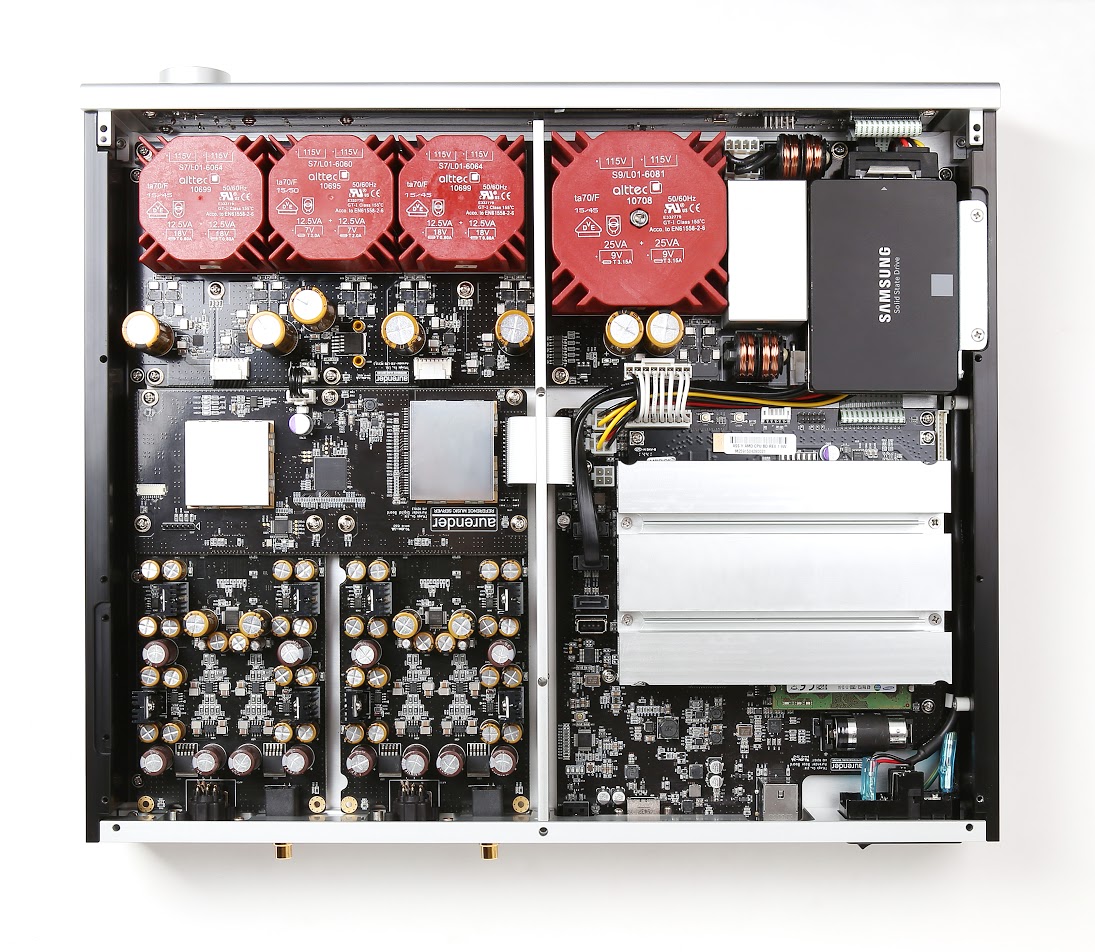
Aurender A10
Inside are a 2TB hard drive for storage and a 120GB solid state drive cache for playback (Aurender’s novel design that reduces jitter and improves sound quality).
Features include:
120GB SSD storage for caching playback
2TB internal HDD storage
Full linear power supply
Both unbalanced RCA and balanced XLR outputs
Dual 768 kHz/32 bit next generation flagship AK4490 DAC chip
Fully separate dual-mono DAC blocks with discrete linear power regulator
Award winning Aurender Conductor Control App
Volume adjustment from controller app or handheld remote control
Dedicated USB output with ultra-low nose circuitry
SPDIF and Optical digital outputs – 24 bit / 192kHz
FPGA-based precision data re-clocking system with sub 100fs world-class jitter-reducing clock generator
Four individual torroid power transformers – one each for server, digital and two DAC blocks
Supports Network Attached Storage (NAS)
3” AMOLED front panel display
Aurender Website
JADIS: Mid-year 2015 we brought in the wonderful tube products from Jadis. This gorgeous range of components from France exudes quality and refinement in both visual design and sonic presentation. Lovingly hand-built in France to exacting specifications, Jadis electronics are clearly the work of dedicated craftsmen. Critical to the performance of tubed component, the all-important transformers are custom fabricated in house.
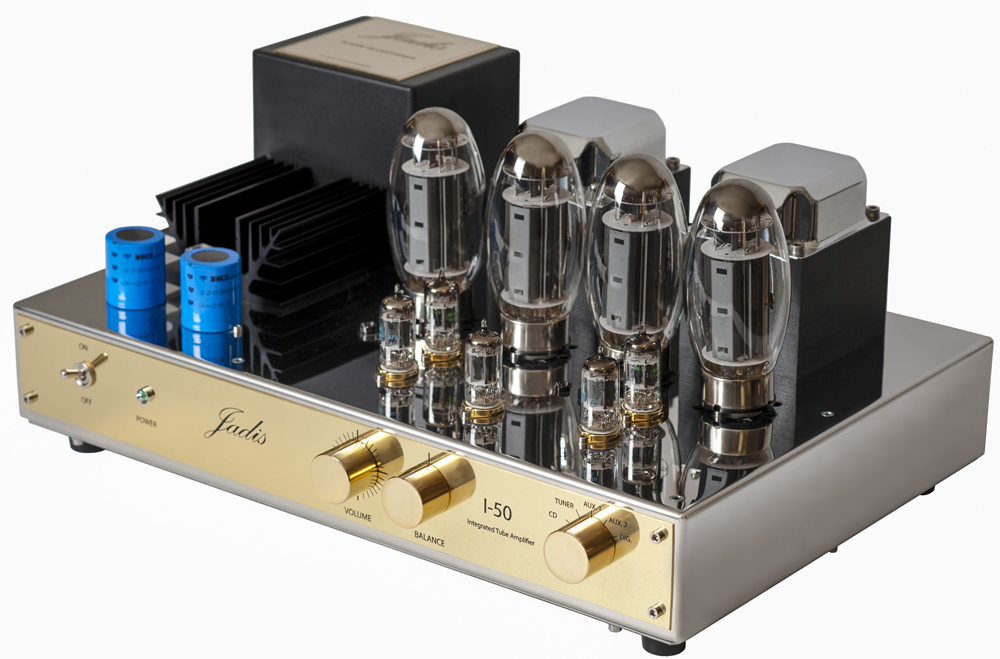
Jadis I50
The most recent arrival is the gorgeous Jadis I50 integrated amplifier. This model sports KT150 output tubes giving the amp fifty watts of pure class-A “Jadis magic.” To say we are impressed is an understatement - we are totally blown away with the I50! The soundstage is as positively huge (yet super-focused) and I have a hard time believing the bass we are getting from this thing. There's power aplenty and the amp never sounds taxed or limited.
For ultra high end performance in a practical single chassis integrated design, I doubt a better option exists, at any price. $9995
Their entry level integrated is the incredibly sweet Orchestra Reference. At $4995 you get the same meticulous craftsmanship and superb sound quality found in the rest of the line.
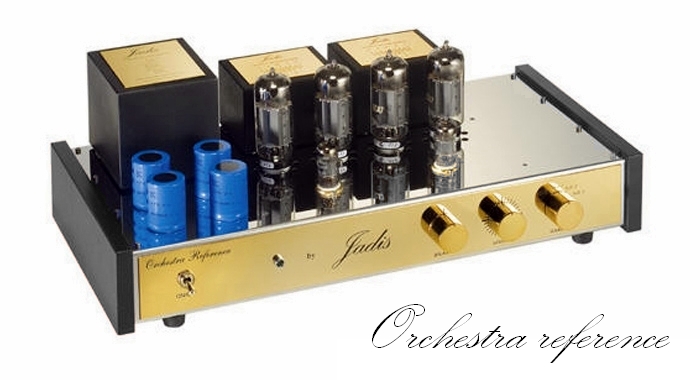
Jadis Orchestra Reference 35
Due for a spring launch, Spendor displayed their new D9 loudspeaker. This three-way design features with two 7” bass drivers, one 7” mid-bass driver and Spendor’s 22mm LPZ soft dome tweeter. The increased cone area and larger enclosure results in greater scale, weight and macro-dynamics compared to the D7.
The D9 was only on static display, but if the superb D7 is any indication of performance, I’m certain the D9 will be a hit. Retail price is $9,995 in Walnut (pictured), Black Ash and Cherry. Premium Rosewood or Ebony finish is $11995.
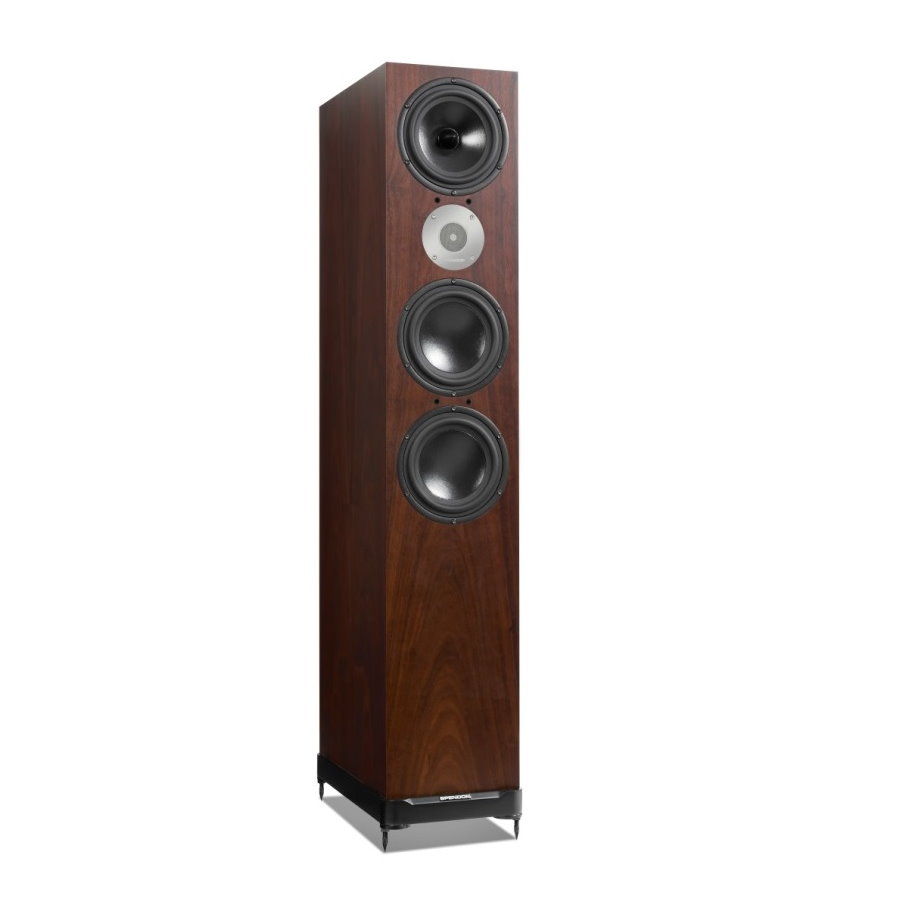
Spendor D9 Loudspeaker
Winter 2016
TECHNICS: For those of you who haven’t heard, Technics is back in audio! We sampled their initial introductions at last year’s CES, and were impressed enough to pursue a dealership. Glad we did as Technics will be offering a complete range of gear covering a broad price spectrum from the one box simplicity of the Ottava system, to the Grand Class of separates, two speaker models, headphones and a return to analog with the re-introduction of the famed SL-1200 (there's also word of a high end ‘table slated for future release).
Three segments define the line: Ottava, Grand and Reference. Though each are envisioned as systems (each level offering source components, amplification and speakers), individual components are available separately for those with existing systems simply looking to ad a piece here or there.
Ottava is a stylish all-in-one product that will appeal to those shopping for a table-top system for office, bedroom or dorm. Ottava combines a CD drive, amplifier, streamer and SERVER all in one elegant package. Complete with a set of small desktop speakers, Ottava sells for $2500
Ottava Website
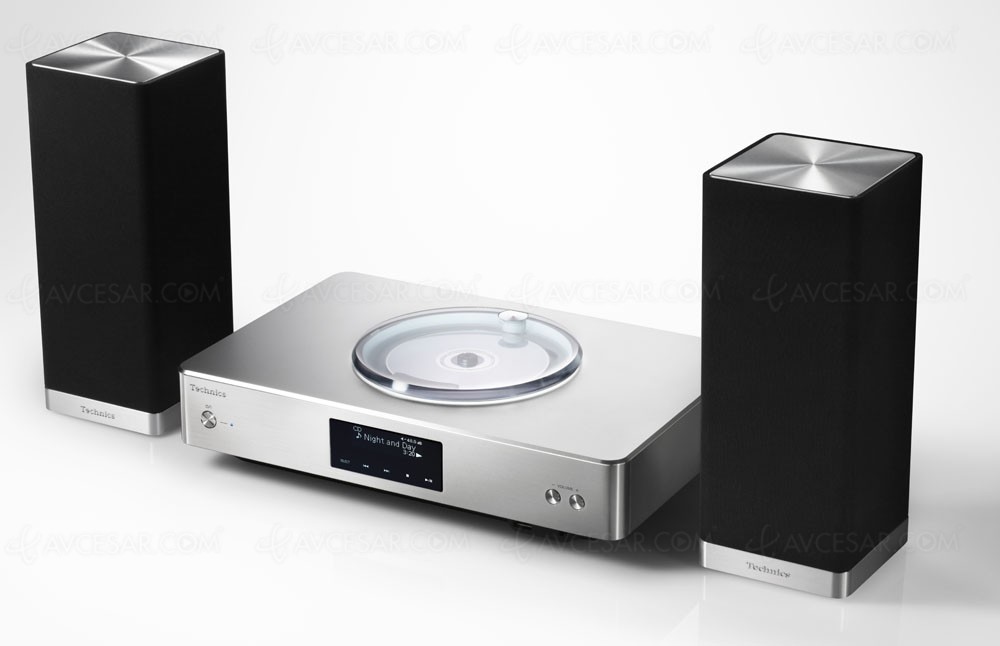
Technics Ottava System
The C700 Series Premium Class represents the next level and is comprised of the SU-C700 integrated amplifier, SL-C700 CD player and ST-C700 Network Audio Player all serving their SB-C700 speakers. The system sells for $4397 (the optional CD player is $1099). We’ve been enjoying the C-700 Premium Class system for a few weeks now. The SB-C700 point-source coaxial speaker, in particular, has been a hoot. The small elegant speakers offer outstanding interstage localization and throw an impressively large soundfield. For a small speaker, bass extension is surprising. They are available in (beautifully finished) black or white gloss and have removable, magnetically-attached grills. Check out the great review in Stereophile: “Whenever audiophiles claim they can't live with colorations, and that they require accurate or neutral reproduction, I laugh, choke up, and expectorate. I don't believe anybody when they say this. All that any audiophile or reviewer—myself included—really wants is his or her favorite colorations. We want recordings to sound like we want them to sound. If you think I'm full of it, I dare you to audition these beautiful, well-engineered speakers. Technics' new Premium Class SB-C700 is not only accurate, transparent, and neutral, it's an excellent value. Highly recommended. “ - Herb Reichert
Read more: Stereophile Review Technics SB-C700 Speaker System
Premium Class Website
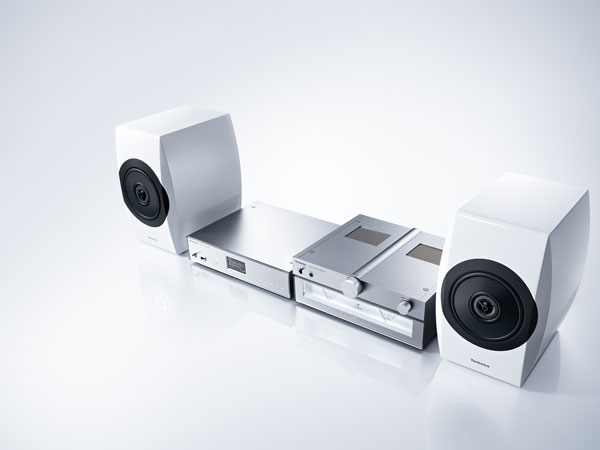
Technics 700 Series Premium Class System
Grand Class G30 – Three components (amplifier, music server and turntable) were debuted at CES, so we assume this will represent another series. The SU-G30 Network Audio Amplifier and ST-G30 Music Server were debuted. The server includes on-board bit-perfect ripping capability with storage on SSD. The amplifier includes a number of advanced technologies. The SL-1200-GAE turntable is described below.
Grand Class Website
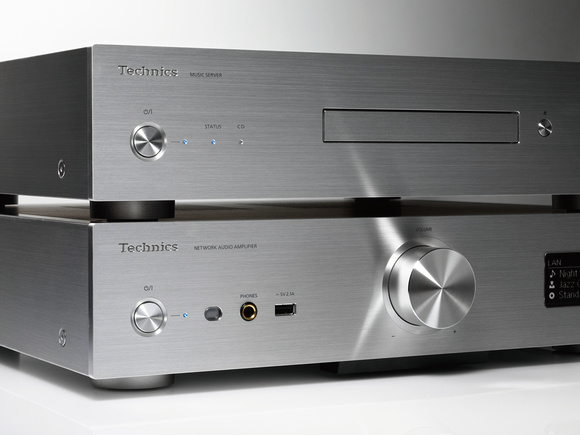
Technics Grand Class SU-G30 Network Audio Amplifier and ST-G30 Music Server
Reference Class R1 is the top of the range offering. The SU-R1 Network Control Player ($8999) acts as both a source and preamplifier feeding the SE-R1 power amplifier ($16999) driving their SB-R1 speaker system ($27000pr).
Reference Class Website
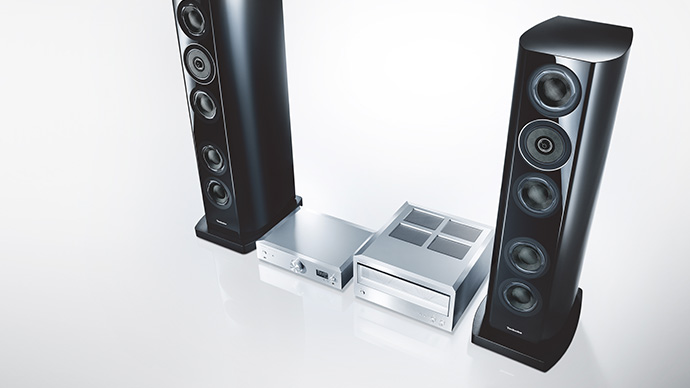
Technics R1 Reference Class System
Technics have developed a range of new technologies for the return to high end. Most of the amplifiers employ unique Load Adaptive Phase Calibration (LAPC) which samples the load presented by the speaker and ideally matches the amplifier to the speaker (we’ve experimented with this briefly and it does indeed improve performance). Technics’ Jitter Elimination and Noise Shaping Optimization (JENO) engine transmits and processes signals in full digital with minimal jitter from input stage to the power stage.
Technics introduced a new innovative headphone at CES, the EAH-T700. The 'phones feature a unique angled driver arrangement with a 50-mm dynamic driver and 14-mm super tweeter mounted at optimal angles, the structure achieves natural sound orientation along with suppressing sound interference between the drivers, thereby achieving smooth wide-range frequency reproduction with good balance. The headphones produced a very natural tonal balance with very good imaging. Price will be $1199

Technics EAH-T700 Headphones
The pre-CES announcement that Technics would be re-introducing their legendary SL-1200 turntable fanned a firestorm of interest from analog music lovers and DJ’s alike. The last version of the SL-1200 was released in Japan back in 2008 and the model has been sorely missed. Today at CES Technics debuted the successor in the form Grand Class Technics SL-1200G and the Limited Edition Grand Class SL-1200GAE.
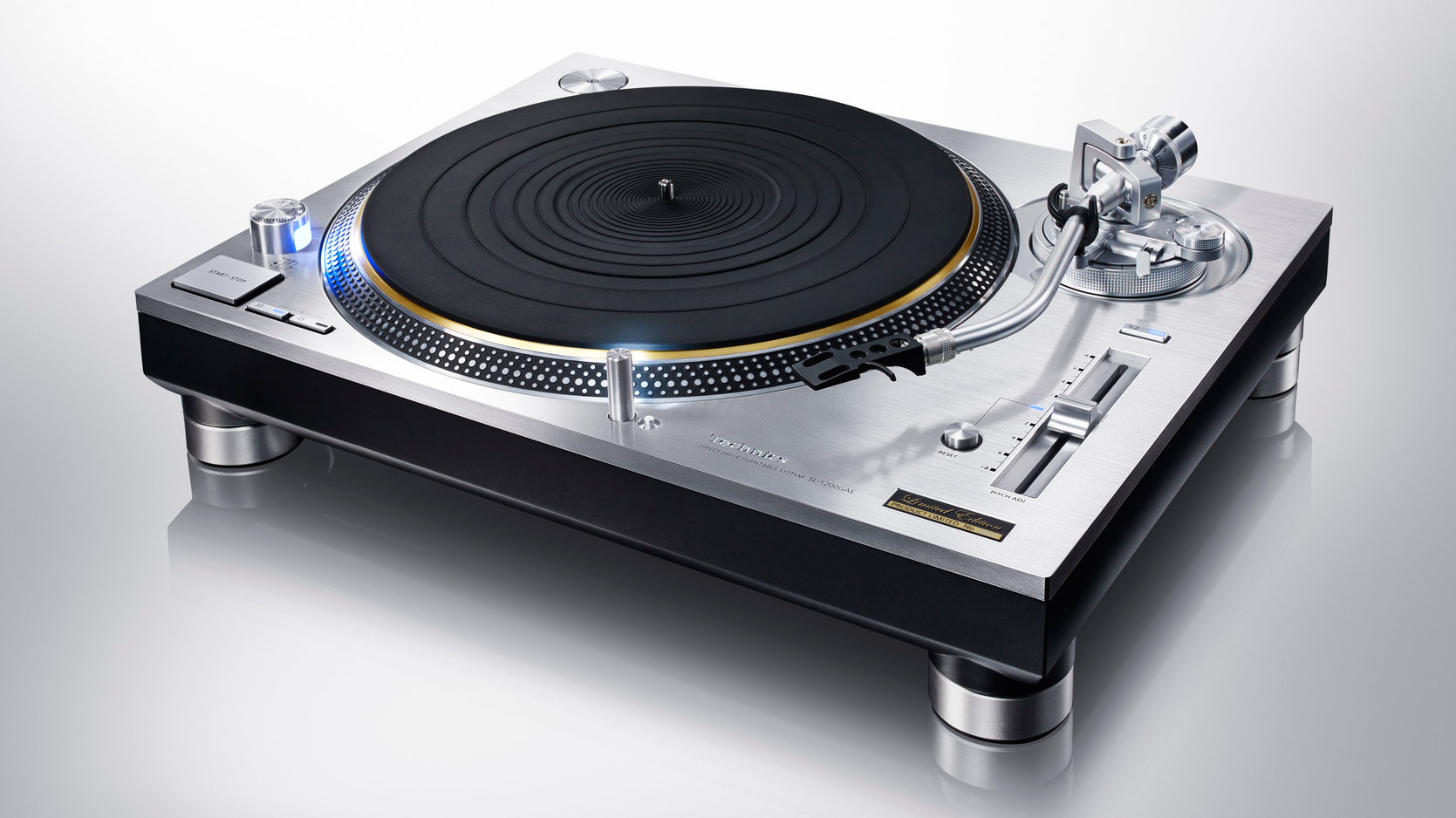
Technics SL-1200GAE Limited Edition Turntable
The ubiquitous form factor remains essentially unchanged, but Technics have made a number of notable upgrades. Technics developed a new coreless direct-drive motor that’s lacking the iron core that’s often the cause of those speed fluctuations in the platter. And any remaining vibrations from the turntable’s electric motor are further suppressed and corrected using new processor-controlled rotational positioning sensors inside the SL-1200G’s housing. New isolation footers and upgraded plinth further reduce the influence of external structure-borne vibration. The platter is now a three-layer affair comprised of differing materials for increased damping and higher mass. Each platter is individually balanced for optimum rotational stability.
The 50th anniversary limited edition Grand Class SL-1200GAE will be available this summer in a run of just 1,200 units. Additionally, the Limited Edition will offer a titanium tonearm and iron & silicone isolation footers along with a special numbered Limited Edition escutcheon plate. Price $3999. If you want one, get on someone’s waiting list ASAP – 1200 units for the worldwide market will not come close to satisfying demand. You will be able to purchase the SL-1200G, but it will not have the GAE upgrades or collectors appeal. Note: The entire allotment of 300 units for Japan sold out in half an hour! We still have a few spots open on the waiting list, so you'd better get an order in PRONTO!
Technics Direct Drive Turntable Introduction
We’ll have a great deal more to say about the Technics products in the upcoming months, but contact us if you’d like to more now.
Winter 2016
CHORD: Chord displayed their new flagship DAC, DAVE (Digital to Analog Veritas in Extremis). Clocking in at $16k (including the machined aluminum cradle, a $2700 option), DAVE is said to establish some new measured performance benchmarks for DAC performance.
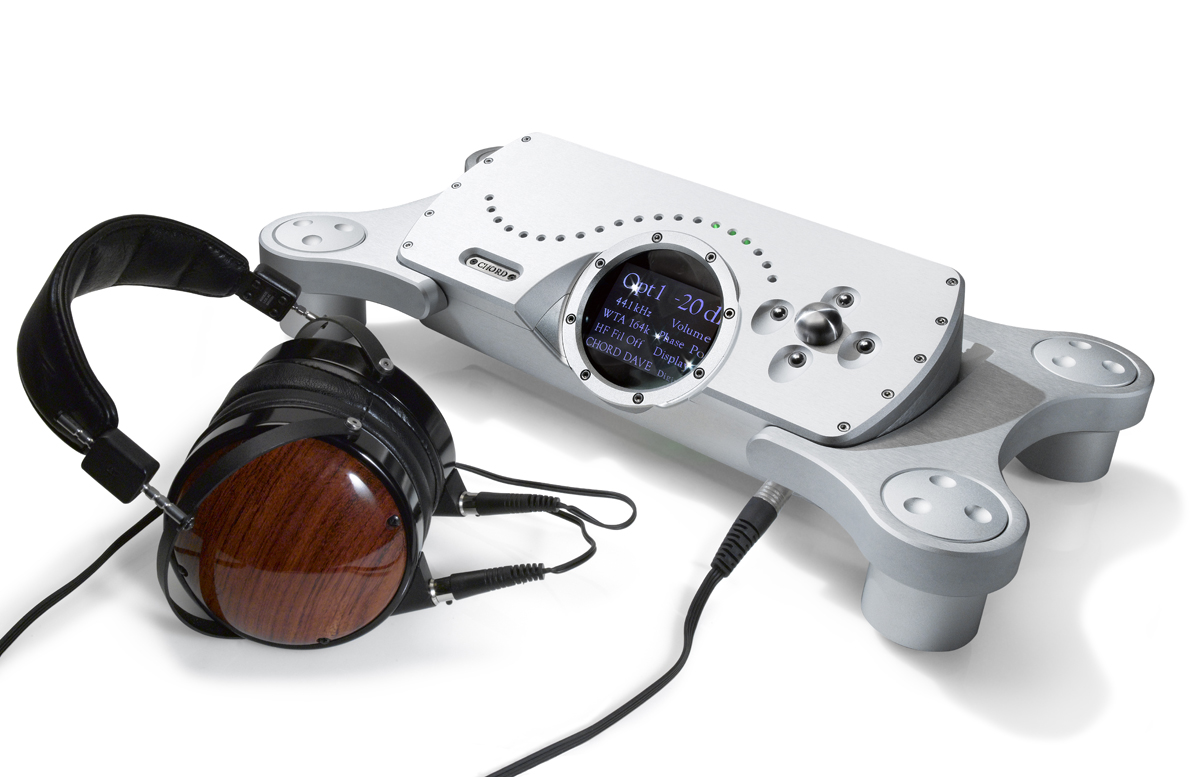
Chord DAVE DAC
DAVE is a highly advanced reference-grade DAC, digital preamp and headphone amplifier. Hand-made in Kent, U.K., DAVE is based around a proprietary FPGA (Field Programmable Gate Array) offering more than ten times the program capacity of its predecessor.
At its heart lies a new (and in electronics terms, huge) LX75 version of the Spartan 6 Field Programmable Gate Array (FPGA). The FPGA''s extraordinary capability enables a number of key sonic benefits including significantly improved timing and the best noise-shaper performance of any known DAC. DAVE's technology delivers music with unmatched reality and musicality, with an unrivaled timing response.
DAVE's designer, Rob Watts, believes the timing response is critical as the ear-brain is extremely sensitive to time domain performance. Knowing this, Watts dropped more taps than ever before in Dave: 164000 in total. He also upped the number of WTA filters from Hugo’s 16 to 256 in Dave, the benefits of which can apparently be heard in rapid firing instruments.
“It’s got the most advanced DAC technology in the world and redefines what is capable for a digital performance. THD + noise @ 2.5v is 127dB, that is state-of-the-art performance. There is no other DAC on the planet that gives you that level of distortion. (showing a scope trace) I've got here an FFT of the 2.5v RMS output and you can see the noise floor is actually -180dB. There is also a red trace which is when the signal is switched off, and you can see the noise floor is exactly identical with no signal and with the 2.5 volts @ 1kHz output. This level of performance has never been achieved before in any product at any price. It's about 30 times more accurate and more capable than the best of the other DACs.” -Robert Watts, Chord DAC Designer, Munich High-End, May 2015
See the video with Mr. Watts explaining the unique technology behind DAVE
Earlier this year Chord announced their portable DAC/Headphone Amp, MOJO and it has been taking the world by storm! Whether you use a smartphone, portable music player or computer, MOJO will dramatically improve your sound. Unlike its competitors, MOJO doesn’t use an ordinary off-the-shelf DAC chip. Instead, Mojo uses Chord’s own proprietary FPGA DAC. This means MOJO offers significantly higher resolution and a stunning sonic clarity that other products simply cannot match - even at twenty times the price!
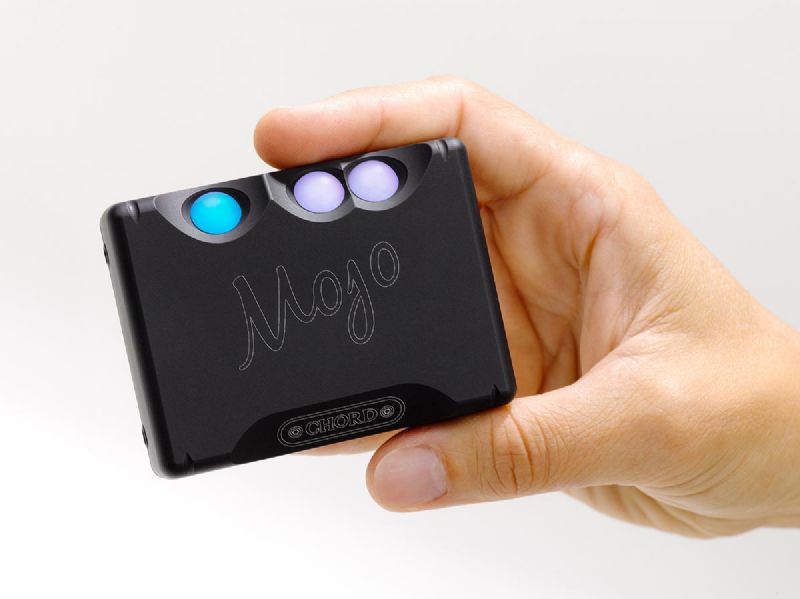
Chord MOJO Portable DAC/Headphone Amplifier
Also inside MOJO is a massively powerful headphone amplifier that will bring your music to life whether you use in-ear buds or large studio cans. Simply connect MOJO to your smartphone or computer, plug your headphones into MOJO, and press Play. Now you will experience crystal clear audio the way you would hear it in the recording studio.
MOJO will play any audio file you can find, even 768kHz/32-bit and quad DSD 256. Thanks to the very latest battery technology, MOJO is able to charge to full in only four hours and will give eight to ten hours of continuous use.
MOJO Features:
• - At only .4 lbs it's small, light and comfortable to carry.
• - Works with iPhone, Android or Windows phones; Mac, PC or Linux computers.
• - Three digital inputs: USB, Coaxial and Optical.
• - Charges in just 4 hours and runs for 10.
• - Works with any headphones; from 4 Ohms to 800 Ohms.
• - Plays all files from 32kHz to 768kHz and even DSD 256.
• - Outstanding value at $599
ROGUE AUDIO: It's no secret; we really love the fantastic products from Rogue. The company prides itself (and we applaud them for it) on a strict adherence to the philosophy of "100% Made in America." Every new model we bring in from Rogue surprises us with its performance and value. All have been exceptionally well made, great sounding and incredibly reliable.
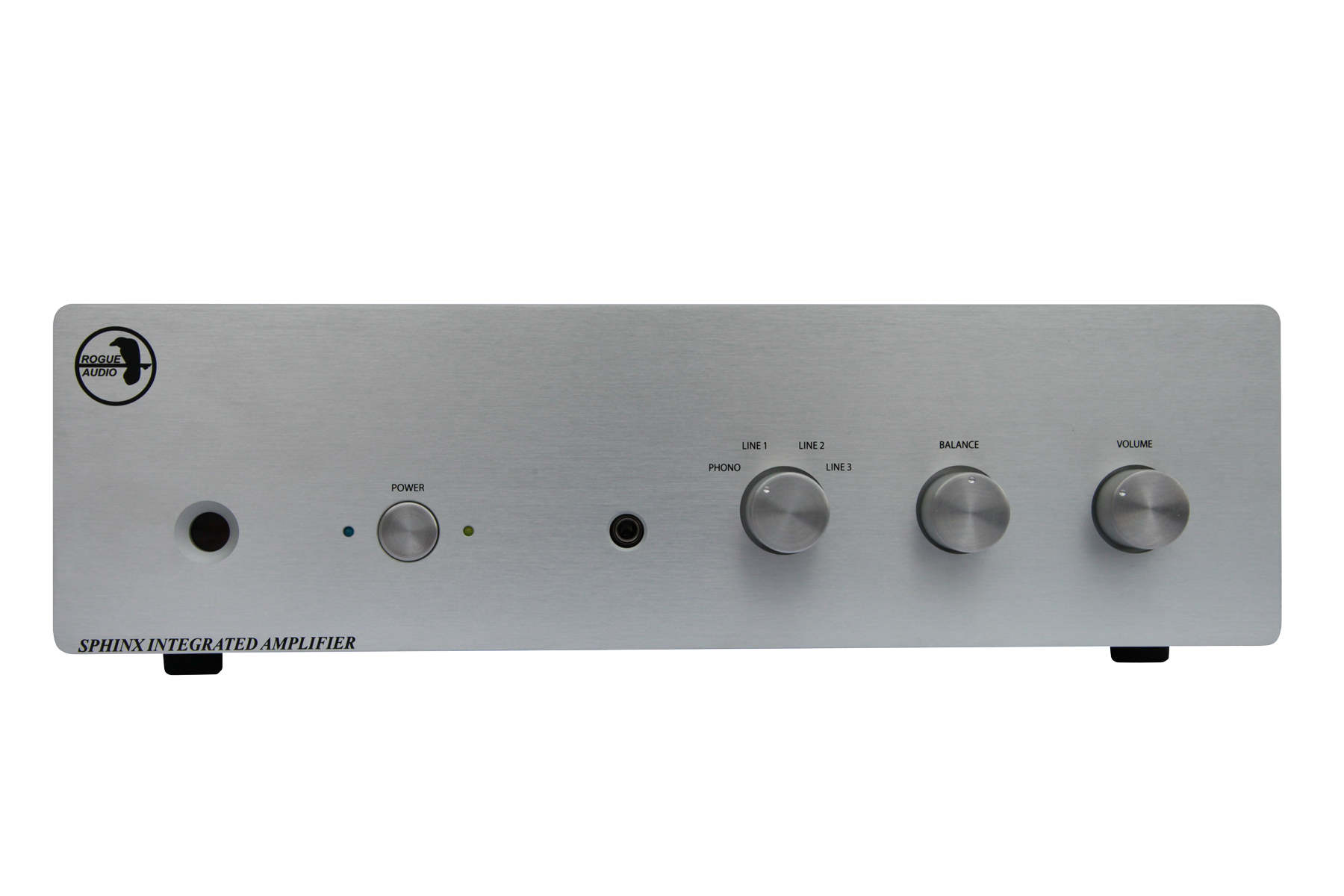
Rogue Sphinx 2
Just in, the latest version of the Sphinx tube/hybrid integrated amplifier. The new v2 iteration represents a host of upgrades for enhanced performance. And without a price increase! These include:
- Significantly lowered noise floor
- Improved phono circuit with 6db additional gain
- Improved 1W headphone circuit
- Mute function added to the new “skeleton” remote
- Updated faceplate
- Pricing will remain the same through the balance of 2015.
We've partnered the Sphinx v2 with a range of speakers and its 100 Watts per channel has driven every one effortlessly. For just $1395 you get a powerful, reliable and great sounding product, made 100% here in the USA. It's a certified bargain!
Following on the heels of the new Sphinx is Rogue’s latest preamp, the RP-1. Elegantly simple yet technically sophisticated, the RP-1 is based on our highly successful RP-X platform. Boasting terrific specs and fully featured, the RP-1 is the new benchmark for an entry level tube preamplifier. Along with the musical and accurate sound you expect from a Rogue Audio preamplifier, the RP-1 boasts an impressive list of features:
Multi function remote that controls volume, source, balance and mute
45/60 dB MM/MC phono with adjustable loading
1W Headphone amplifier
OLED display with on/off
Four line level inputs
Two pairs Preamp outs
One pair fixed outs
Home theater bypass
5Hz-75KHz +/- 1 dB
15.25” W x 14.5” D x 3.2” High
List price for the RP-1 is $1,695.
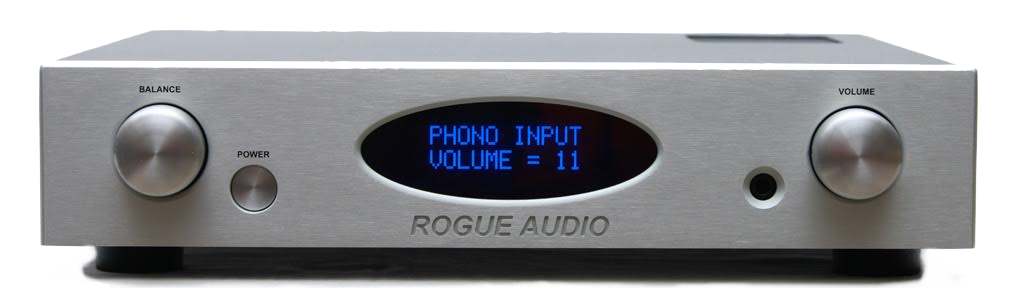
Rogue Audio RP-1
REGA: In development for years, and following hot on the heels of Apheta 2, comes this new high end Moving Coil cartridge featuring Rega's unique pivot point suspension and one of the world's smallest generators. The Aphelion will be arriving on our shores February 2016. Order now to secure yours!
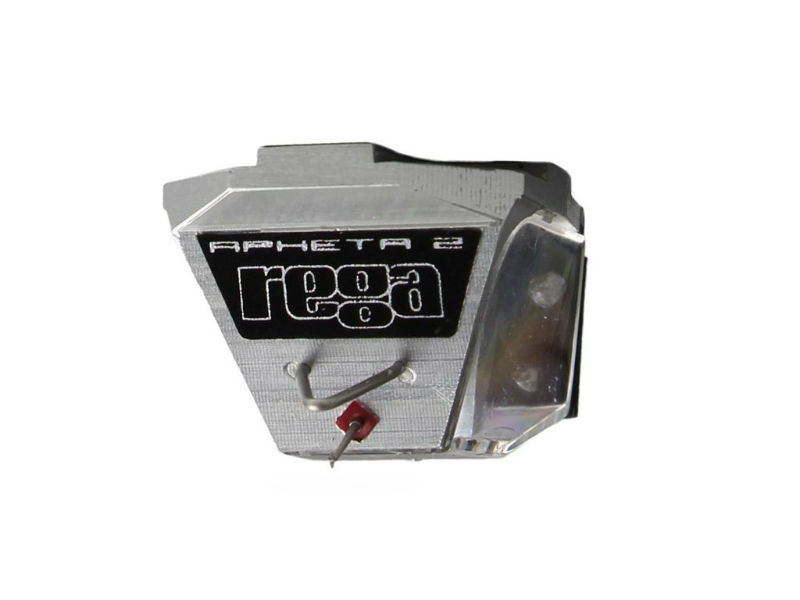
Rega Apheta 2 MC Phono Cartridge
SPECIFICATIONS:
boron cantilever
inverted Vital-profile diamond stylus
pivot pad suspension eliminates tie-wire
micro iron cross (50% smaller than Apheta 2)
high-spec .0018mm fine copper wire
high power neodymium magnet
zero tolerance CNC-machined black anodized aluminum body
.35mV output
channel balance: .10mV +/-
channel separation: -29dB
100 ohm input load impedance
10 ohm output impedance
$1895 (or at a great savings when pre-mounted on an RP-10 for $6695)
JEFF ROWLAND: Shown but not heard was the new version of the company’s popular 275 mono blocks amplifiers, the 725 S2. Central to the upgrade is a new “error correction” circuit Jeff has designed. A rather significant performance improvement is promised – better resolution, air, soundstage and improved bass articulation. Expect a slight increase in price. Upgrades will be available to current 725 owners, with an anticipated cost of approximately $700.
DYNAUDIO: The popular wireless Xeo 3 speakers now have a stable mate, the Xeo 2. The wireless self-powered Xeo Series speakers offer an incredible amount of performance in a very compact package. The Xeo 2 adds to connectivity of the Xeo 3 with the inclusion of Bluetooth streaming with aptX and AAC support (along with digital via TOSLINK and analog via RCA). Each of the drivers in the Xeo 2 is powered by a separate 65 watt internal amplifier, giving the speaker scale and extension not expected from a speaker of its size.
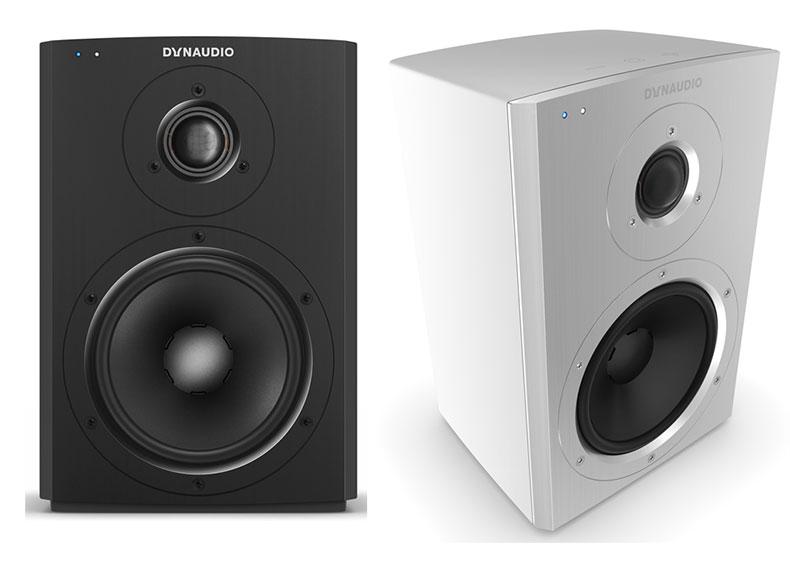
Dynaudio Xeo 2
Construction and finish quality are superb, just like with all Dynaudio products. Both black and white finishes are available (with other colors planned) as are optional desktop stands. Available now, price is $1599 pair.
REL: With the S/3 and S/5 having garnered no less than eight product of the year/subwoofer of the year awards in their first year of production, most companies would be satisfied to rest on that success. Not REL. Their ongoing research and development efforts have resulted in significant upgrades to their popular S/3 and S/5 models, which now carry the SHO designation. The drive and control electronics now features new 3-stage “Limitless V2 Limiter” circuitry allowing increased system output without sacrificing low frequency extension or the tuneful and precise bass REL products are known for. The result is better low end performance, faster articulation and greater sense of ease. Price estimates for the new S/3-SHO is $1995 with the S/5-SHO coming in at $2499.
SENNHEISER: Sennheiser has just announced the new HD-800-S reference class headphones. Building on the incredible popularity of the legendary HD-800, the new "S" model looks to build on that legacy. Price is $1699.95 and we are accepting pre-orders.
Features -
* Further optimized reference class in wired headphones
* Open, circum-aural dynamic stereo headphones
* Enhanced sound reproduction achieved through absorber technology
* Additional cable with balanced XLR4 connector
* Matte black metal parts
* Natural hearing experience - realistic and natural sound field with minimal resonance
* Largest transducers ever used in headphones.
* New innovative dynamic transducer design
* Uncovered earcups for enhanced acoustics
* Handcrafted ear pads, made of high-quality microfiber fabric
* Metal headband with an inner damping element
* Specially tuned balanced, impedance matching cable with low capacitance
* Special high precision headphone connectors
* 2 year warranty
Dynaudio Xeo 2
VAN DEN HUL: There’s a new U.S. Distributor for the superb phono cartridges from the master builder, A.J. van den Hul. His latest creation, the Crimson Stradivari, arrived shortly before CES, so we’ve only had a brief peek into its character, but we are extremely impressed so far.
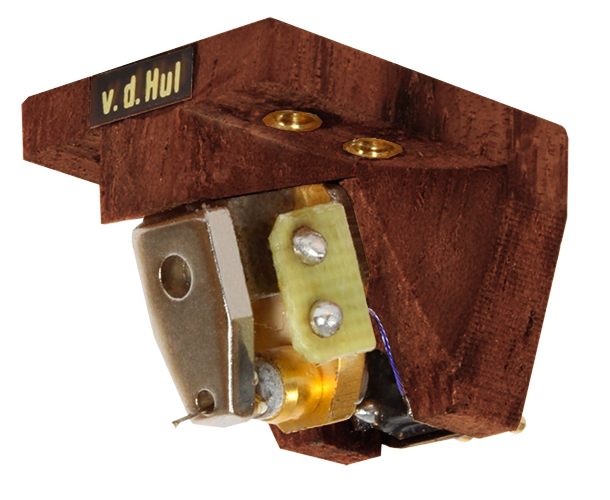
van den Hul Crimson Stradivari MC Phono Cartridge
With a bit more output than your typical MC, the 0.6mV makes the Crimson Stradivari compatible with a wide range of phono preamps. $4995.
I received a copy of a very brief review from Japan. Not entirely well translated here, but you’ll get the jist.
“...the texture of sound is very fine, and dense. The attack is sharp and timbre is Crystal clear.
The baroque violin sounds delicate and lush. The ensemble has a charming sparkle on its sound, and the body is full, too.
The each note of the piano seems to be etched with fine reverb, resulting in a very distinctive resolution.
The low note feels slightly thicker and rounded. However, it will never get muddy but keeps clear timbre even when it tracks the peak attack of the music.
The cartridge picks up sharp attack from orchestral music. Not only the string instruments but also brass and tympani also maintains sharp attack.
The low level notes of woodwind instruments lyrically reproduced with a touch of silence, and dynamically contrasted with contrabass.
The overall sound is dynamic and vivid.
The chorus sounds dynamic and powerful. From the whispering voice to the vivid attack of the drums ...the Crimson sounds truly dynamic and impressive.”
Winter 2016
AUDIENCE: At CES 2016 Audience introduced their new top of the line Au24 SX interconnect and loudspeaker cables, designed to achieve extraordinary audio performance and musical accuracy to complement the finest audio systems.
Au24 SX exceeds the performance of Audience's long-standing and acclaimed Au24 cables by the use of improved XLPE (cross-linked polyethylene) dielectric material, higher-purity "six nines" copper (compared to the previously-used "five nines" copper), and by making some improvements to the cable geometry. In addition Audience will offer an Au24 SXL optional speaker cable that is a slightly higher gauge. The sonic results are greater transparency, improved focus, higher resolution of micro-detail, a richer tonality and a more pristine soundstage.
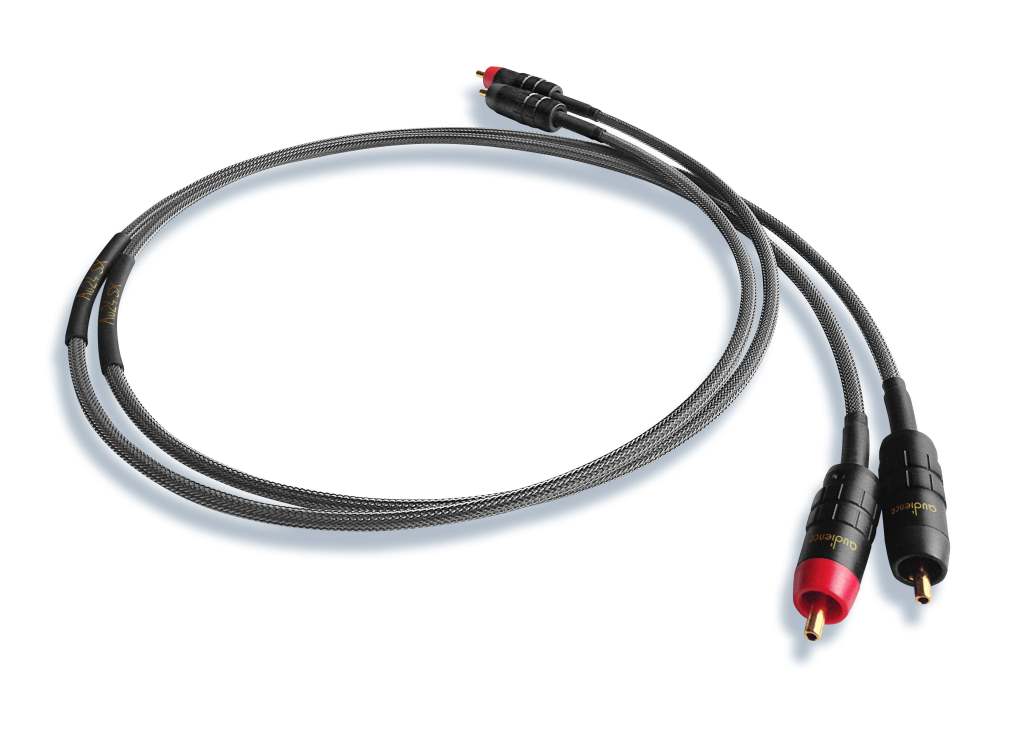
Audience Au24-SX
SX loudspeaker cables are offered in two versions; the "reference" is much like the gauge of the historically made Au24 lines. SX will also be offered in a heavier gauge yet similar geometry and is noted on the price pages by (L) for large. Both the reference SX and large gauge SXL cables have outstanding characteristics. The reference stands out with its tremendous focus and stunning coherence. It is much like the Au24 SE, yet it is more open and resolute particularly noted in the mid range and down. The SXL has a more relaxed, dynamic and lush presentation as compared to the reference.
The Audience line of balanced cables are a “True Differential Balanced Design” engineered to take advantage of a differential circuit by creating a fully differential cable, from the ground up, which optimizes the benefits of the sonic characteristics inherent in a balanced circuit topology. This, of course, required more wire, a more complex design, meaning it is as proportionally complex as the differential circuit to which it is being connected. Audience did not use the same wire design as the optimized single-ended cables and just terminate with an XLR connector, as most other companies do, or vice-versa. Instead, Audience offers a true differential balanced cable that will expose the benefits and bring out the best in your balanced components.
We have both interconnects and AES/EBU balanced digital cables on the way for evaluation. Stay tuned!
The system on audition featured the latest Audience 1+1 V2+ loudspeakers and Audience aR6-TSSOX power conditioners along with the new cables described above. The sound was especially coherent and the tiny speakers created a huge soundfield.
AUDEZE: Launched at CES is the new flagship for the brand, the LCD-4. Their top of the range planar magnetic was on hand in the Chord suite and I heard them connected to Chord’s reference DAC, DAVE ($16000). Sound was quite lovely, a bit of background noise made a serious evaluation difficult.
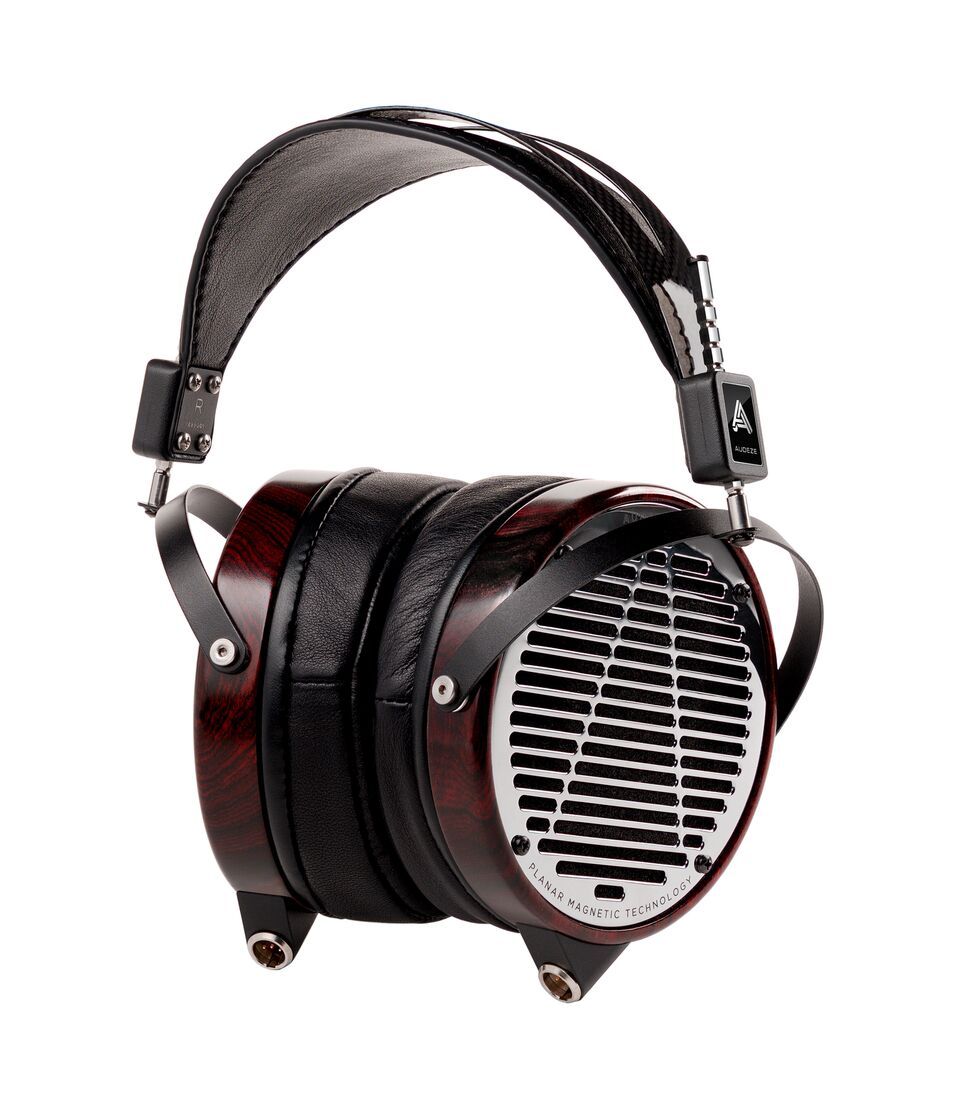
Audeze LCD-4
Audeze debuted another new model, this time defining their entry-level offering. The $499 Sine is an on the ear model and also the brand’s lightest set of cans. Emphasizing portability and convenience — they even fold flat for easier storage and transport. The Sine will also be compatible with Audeze's fully integrated Lightning cable, which includes a built-in digital-to-analog converter and digital signal processor, ensuring high-quality playback that's tailored to Audeze's particular strengths. End of January to first part of February.
MOBILE FIDELITY: Known for their software offerings (LPs and CDs), MoFi has now branched out into both hardware manufacture and distribution. On the distribution side they are handling Quad, Wharfedale, BAT and others. At CES they displayed the first of their hardware offerings, showing two turntables, three cartridges and two phono preamps.
The StudioDeck ‘table/arm (a streamlined design reminiscent of a Rega) will be available at $995 or $1149 with their $300 MM phono cartridge. The UltraDeck is the step up model going for $1800 or $1995 with their $600 cartridge. Both models include a dust cover and are made in the USA.
The three cartridges (all MM) are priced at $299 (StudioTracker), $599 (UltraTracker) and $899 (MasterTracker). The top two models are aluminum-bodied. Cartridges made in Japan.
Two phono preamps are promised, all penned by renowned designer, Tim deParavincini. The Studio should come in under $300 and the Ultra will about $400.
MUSIC HALL: Several new turntables were debuted at the Music Hall suite: mmf-2.3 at $499, mmf-2.3LE for $549, mmf-5.3SE priced at $1095 and finally the mmf-7.3 for $1595. On the electronics front was the pa2.2 which combines an mm/mc phono preamp with analog to digital converter, preamp and headphone amp for $399. Lastly, Creek showed the Evolution 100CD player with volume control and headphone output priced at $1095.
In case you missed the announcements on our website or Facebook page, here is a brief rundown on some exciting products that were announced prior to CES.
AUDIOQUEST: Before CES, a REALLY heavy box (93 pounds) arrived from Audioquest; it was their just-released Niagara 7000 power conditioner. The unit features a wide range of features to combat power line related "nasties" including; Dielectric-Biased AC Isolation Transformers, Transient Power Correction, Ground Noise-Dissipation System, 21-Octave Ultra-Linear Noise-Dissipation Technology and Ultra Low-Z (low impedance) NRG Series AC Power Inlets and Outlets (geez, these things are TIGHT!).
We're just in the early stages of break-in, but the Niagara is sounding quite good thus far. Check in with us a bit later for a full report. The Niagara 700 is $7995. At CES the company announced two additions to their power conditioning lineup, the Niagara 5000 and 1000 models. $5000 and $1000 respectively.
Investigate further at the company's website: http://www.audioquest.com/niagara-7000/
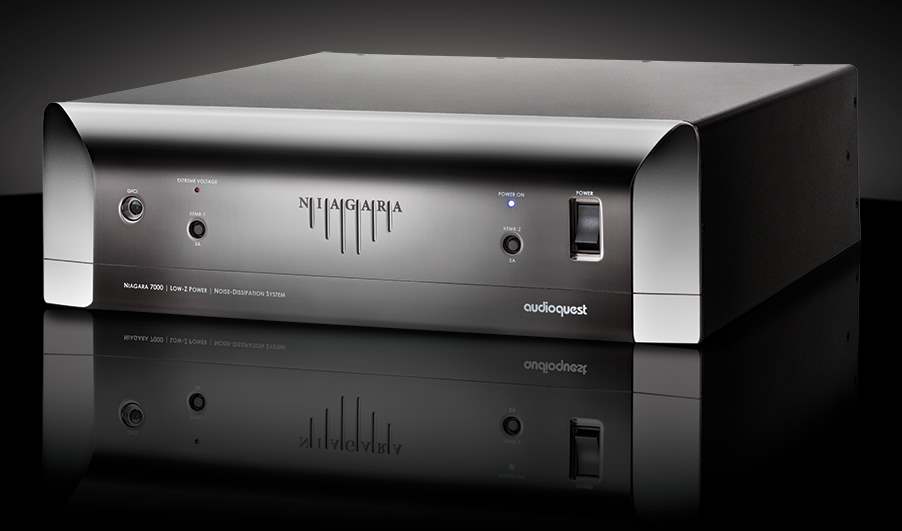
Audioquest Niagara 700 Power Line Conditioner
AURENDER: Just in, the new N10 Music Player from Aurender! Sliding into the line above the N100 and X100 models, the N10 replaces the company’s S10. Designed to be used with high performance digital-to-analog converters, the Aurender N10 is the only Music Player to support on-the-fly precision DSD to PCM conversion by FPGA.
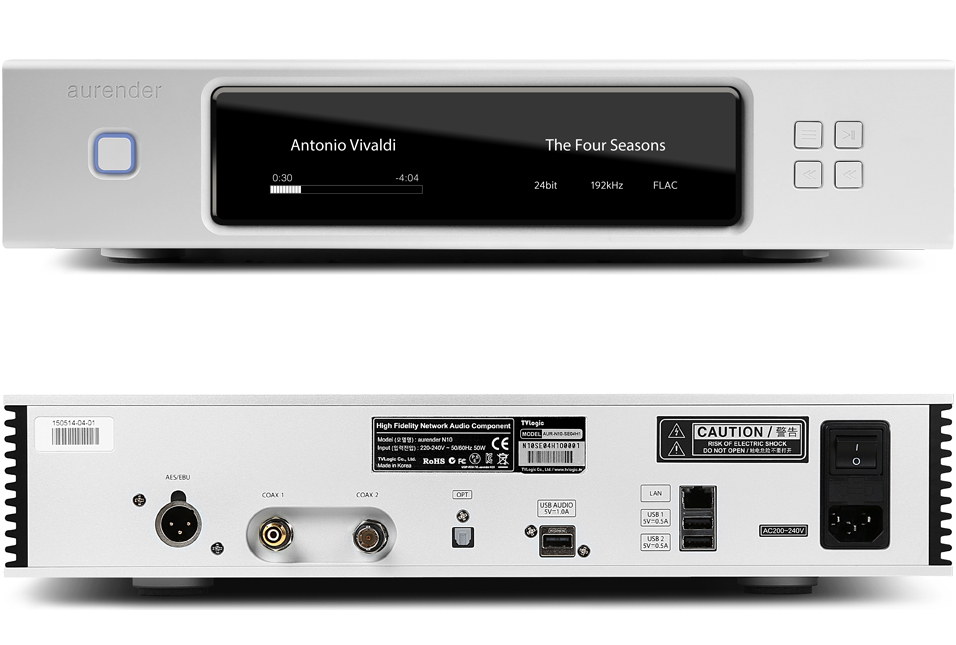
Aurender N10 Music Server
An All Digital Phase-Locked Loop system (ADPLL) incorporating Field-Programmable Gate Arrays (FPGA) with OCXO clocks precisely times digital audio data transmissions and minimizes jitter to below negligible levels.
With 4TB of (2TBx2) internal hard disk drives and one 240GB solid-state drive cache for playback, the N10 offers enough storage space for even very extensive music libraries. The N10 features a full spate of digital outputs allowing flexibility in selecting the output most appropriate for your DAC.
The award-winning Aurender control app now allows access to the TIDAL music streaming service!
We’ve had our N10 in service for a couple of months now and have been thrilled with its performance. In stock, order yours today! $5500
HIFIMAN: The flagship of the HiFiMan line up is the HE-1000 planar magnetic headphones, their flagship. Said to have the thinnest diaphragm of any such design, the HE-1000 offers outstanding resolution of subtle detail. $2995.
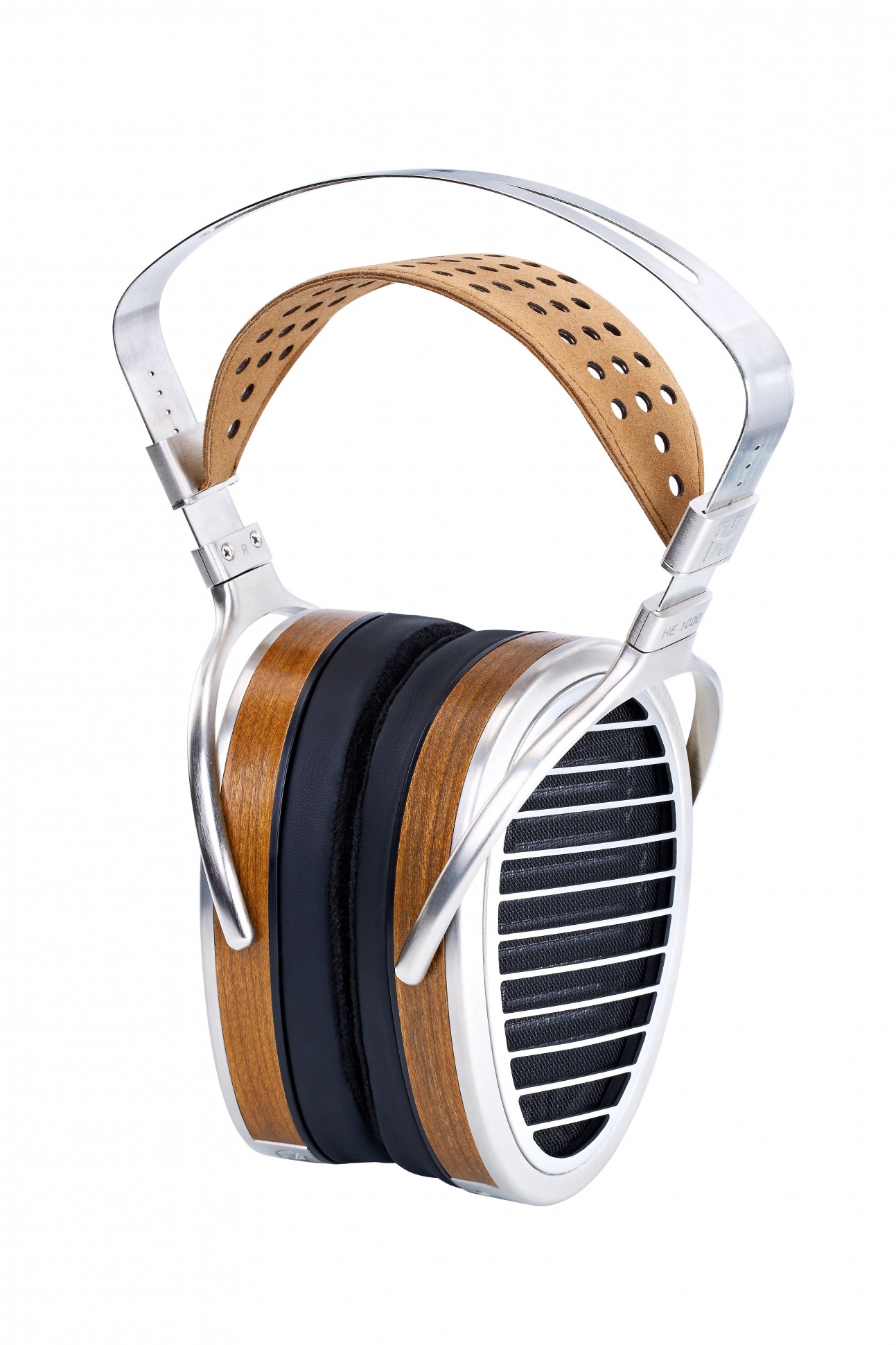
HiFiMan HE-1000 Headphones
Tyll Hertsens of Inner Fidelity writes: "But...the sound quality...oh my..." and goes on to say: "So seductive. I don't remember when I've had a headphone that sucked me into the music this much. And not just one type of music...almost any and every track I punch play on stops me in my tracks. The exception would be loud complex music like metal mass orchestral crescendos where the HE1000 seems to become a bit too confused in the mids and treble.
The best word I've found to describe the overall sonic impression of the HE1000 is "soft." At first, after hearing them for a bit, I thought this soft nature would end up reducing dynamic impact. It does, a bit, but on continued listening I feel the dynamics are actually above average. Like a lot of things with this headphone, when you take a particular attribute you can pick it apart, but when you listen to the whole of the music the problem just doesn't seem to matter much anymore. These are just an incredibly pleasant headphones to experience."
At CES I heard the Company’s latest creation, Edition X. It seems to have a good portion of the same sound qualities of the HE-1000, but a more approachable price of $1795. The Edition X have a very similar external frame structure and headband to the HE-1000, as well as being lightweight and quite comfortable. They are also easier to drive, which make them comnpatible with many portable devices (I've been driving with a iPad and it sounds great), as well as any headphone amplifier. Very sweet, smooth and relaxed sounding headphone, an instant favorite here.
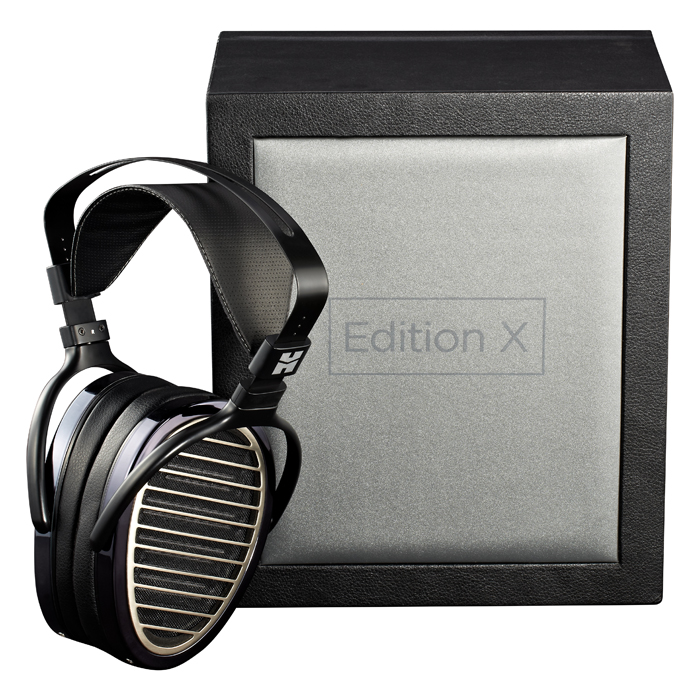
HiFiMan Edition X Headphones
Winter 2016
DAVONE: The Davone line of loudspeakers has always intrigued me. Their Danish styling is both elegant and sophisticated - build quality and woodworking is exceptional. Impressed with the esthetic I was never sure if their sonic performance could match their visual appeal. I’m happy to report that I’m both surprised and impressed with our first introduction to the lovely Tulip, unique Mojo and the Ray S models. Four models comprise the lineup, with a style and price point to fulfill most requirements. All Davone models are handcrafted in Denmark to exacting standards.
The Tulip – a svelte, petite two-way floorstander - punches well above its weight class. After an initial overnight break-in, I was pleased with their soundstaging abilities and quite amazed at the bass extension. More performance sure to come with extended playing time, it will be fun to see what lies ahead. $4499pr
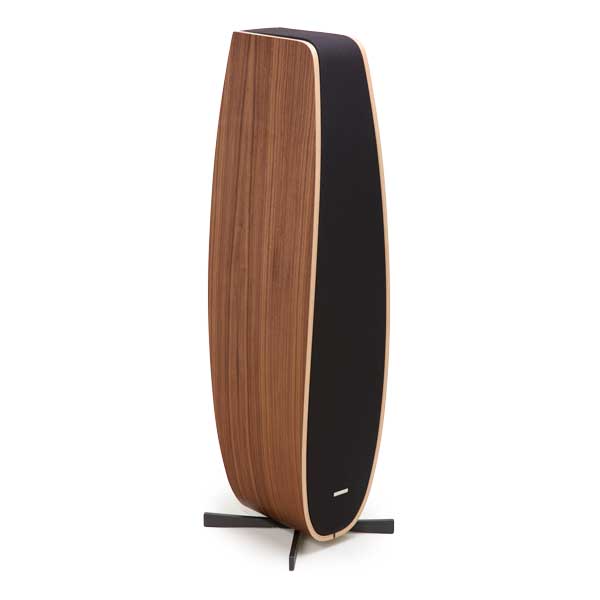
Davone Tulip
Mojo is a unique product employing and upward-firing tweeter with cone-shaped wood diffuser giving 360-degree dispersion. There is a downward woofer mounted underneath the truncated cone-shaped enclosure. The enclosure is fabric-wrapped and available in several colors and the wood diffuser can be had in various finishes to match or contrast the enclosure. $1999pr
The stylish and unique form factor makes the Mojo an ideal solution for applications that wouldn’t be appropriate for more conventional speaker designs. Sonically the Mojo is surprising for what it offers. It’s not the last word in resolution and won’t rattle windows with bass power, but the Mojo offers a very enjoyable and rather remarkable room-filling performance.
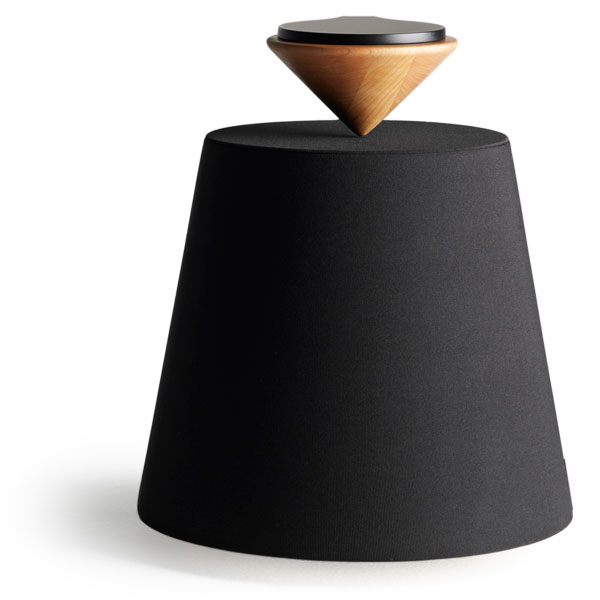
Davone Mojo
Looking straight out of the Jetson's TV series, the Ray S is likely the most distinctive member of the family. Its unique shape sets it apart for any other speaker on the planet. The fluid cabinet shape has not just been an esthetic choice. The unique baffle shape, combined with the close proximity and off center mounting of the tweeter and mid toner, gives a more balanced in-room response than the popular tower shaped speaker. Practically this means that great results can be obtained without re-doing the acoustics of your listening room. Ray-S is a loudspeaker that avails itself of the same recognized technological value of the top of the line Grand, with the objective of achieving new levels of performance in the reproduction of sound. With state of the art components this loudspeaker lofts beautifully three-dimensional soundstages, exhibits admirably neutral tonal response, and delivers unexpectedly explosive dynamics. Quite a remarkable speaker and one that sounds totally different than what you might expect from its appearance. Fully handcrafted in Denmark. $8200pr
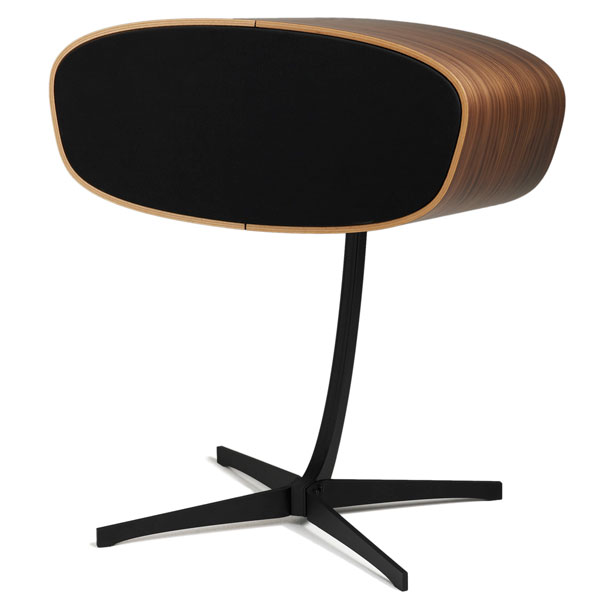
Davone Ray-S
At the top of the Davone line up site the Grand. Another model with a distinctive look, the Grand employs a complex cabinet consists of no less then twelve carefully matched elements for each pair of speakers. Each of these elements is constructed from 16 layers of curved beech wood strengthened furthermore with massive internal bracing. With the solid steel FEM optimized stand design, the cabinet provides an inert base for the top quality drivers. $22500pr
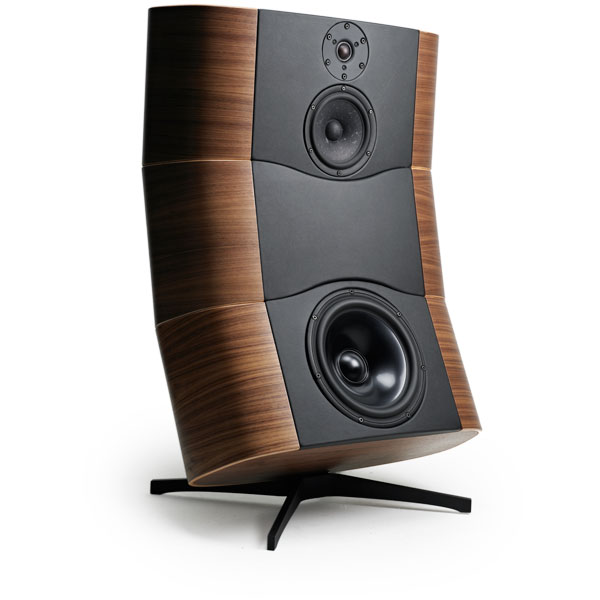
Davone Grand
 Page 1
